Showing posts with label Brief histories. Show all posts

Sunday, 1 June 2014

A brief history of pinball


At the beginning of Steven L. Kent's 'Ultimate History of Video Games' there is this quote by former CNN Computer Connection producer, Steven Baxter, which says:

"You can't say that video games grew out of pinball, but you can assume that video games wouldn't have happened without it. It's like bicycles and automobiles. One industry leads to the other and they exist side by side. But you had to have bicycles to one day have motor cars."

So when people point at Pong or even the oscilloscope game Tennis for Two, way back in 1958, as the origins of video games, they are missing out on this simple truth. With that in mind here is Arcade Throwback's brief history of pinball, the true origin of arcade gaming and the huge home and mobile gaming industry we know today.

Bagatelle and the beginning of pinball

Being essentially mechanical in nature, pin games have been around for centuries, all the way back to Bagatelle tables in the 15th century, like the one below.

An example of a Bagatelle table.
Even without flippers, flashing lights, ramps or digitised score[board]s, it's easy to see how this could be the origin of pinball, although it's actually a form of billiards. Some versions of Bagatelle also included wooden pins, which  had to be avoided in order to get the balls into the cups. A few centuries later, a variant called billiard Japonais (Japanese billiards) replaced the cues with a plunger and the free-standing wooden pins with fixed, metal pins (basically nails). Billiard Japonais went on to inspire a few other games, including pachinko and something that got us a whole lot closer to the pinball we know today, but for that we need to fast forward to the 1930s.

Baffle Ball and Ballyhoo

In 1931 David Gottlieb invented a variation of billiard Japonais which he called Baffle Ball. In this new game players had to rock the table to get the balls into the desired hole — a technique that would later become known as nudging. Compare the photo of Baffle Ball (below) to the photo of the Bagatelle table above and the resemblance is undeniable.

Gottlieb's first pin game.
The success of Gottlieb's game meant it wasn't long before others started to create their own pin games. Among them was Ray Moloney, owner of Lion Manufacturing and creator of Ballyhoo. Moloney's game was so successful, he decided to change his company name to Bally and a future legend of pinball was born.

By all accounts, Gottlieb had a knack for balancing skill and challenge to make fun games, but around the same time another big name for pinball emerged. His name was Harry Williams and he was a Standford-educated engineer, which meant he knew how to create complex mechanisms for his games. In 1933 he created Contact, the world's first electric pinball game. Previously, once a ball landed in a scoring pocket, it had to be retrieved by hand (either by picking it out of the pocket or from a collection tray at the bottom). Contact's scoring pockets had electrically-powered contacts (hence the name) that knocked the ball back into play, allowing the game to continue uninterrupted. Unfortunately, it is around this time that problems started to occur for pinball and pin games, all of which linked back to early gambling machines called pay-outs, which looked a little like pinball machines. It seemed some people in authority couldn't (or wouldn't) see the difference.

Pinball outlawed

A pinball machine being demolished after a raid

By the 1940s, pinball was outlawed in many parts of America, as it was thought to be a form of gambling with links to organised crime. It was also thought to be a bad influence on America's impressionable youth, who would waste their time and money on the games. In 1942, New York Mayor, Fiorello La Guardia, authorised raids on pinball establishments and issued arrest warrants for their owners. And what happens when the authorities try to ban something? It goes underground, develops an almost mythical reputation and becomes more popular than ever. The manufacturing, innovation and popularity of pinball continued unabated, with Chicago becoming the capital of pinball production, despite it also being illegal there. It was in the windy city that Gottlieb, Bally and Williams were all based. Gottlieb in particular battled to legitimise his games. He knew the key would be to prove pinball was more than a game of chance, which meant his games needed to demonstrate the need for skill.

Putting the flip into pinball

In 1947, Harry Mabs, one of Gottlieb's engineers, added spring-powered "flipper bumpers" to a game called Humpty Dumpty. The flipper bumpers were used to knock the ball back into play, in exactly the same way as modern pinball, which added weight to Gottlieb's argument that pinball needed skill to play. As the video below shows, Mabs' flipper bumpers were not located at the bottom and there were more than two of them - in fact, there were six:


Flippers revolutionised pinball, to the point that in France, pinball tables are known as le flipper. Gottlieb's competitors got in on the act and for the next few years all pin games had six flippers in a similar arrangement to Humpty Dumpty. Eventually having two flippers at the bottom of the table became the norm, but it was actually for reasons of thrift, rather than design choice. The man to thank for that was Steve Kordek, a designer at a company called Genco. He was under instructions to save money in his designs, so he reduced the number of flippers to two and in order to make them as useful as possible, he put them at the very bottom of the table. The result was a table called Triple Action. It's still not quite the pinball we know today, as the flippers still pivoted from the middle of the table, rather than the outside edges (a la Humpty Dumpty), but it was still a major step forwards.

Two flippers at the bottom. The start of something big.
The introduction of flippers proved pinball needed skill to play and by the mid-70s most US cities lifted the ban. This is what Gizomodo has to say about the day the ban on pinball was lifted in New York:
"In May of 1976 in New York City, Roger Sharpe watched nervously as city council members piled into a Manhattan courtroom. Reporters and camera operators had already begun setting up, eagerly anticipating the proceedings ahead. Roger, a young magazine writer for GQ and the New York Times among others, did not expect this kind of attention. He knew lots of people, from bowling-alley-hanging teens to the Music & Amusement Association, were depending on him, but didn’t realize the whole country would be watching. Roger had been selected for this particular task not only for his knowledge and expertise, but for his legendary hand-eye coordination. He was there to prove that this was a game of skill, not chance. He was there to overturn the ban. He was there to save the game of pinball."
Despite this, bans on under 18s playing pinball remained in various parts of the US up until the 2000s and pinball was still illegal in the town of Beacon, NY, up until 2010 (and may still be). I cannot find anything to suggest pinball was banned in the UK, but our laws did influence the industry. In 1991, UK laws on chance games saw the introduction of the ball saver feature. This is why modern pinball tables will often give you a free ball if, straight after being launched, it drops out the bottom without the player hitting it.

Dark heart of the arcade

For decades, the pinball machine was a symbol of delinquency and rebellion, like rock 'n' roll and motorcycles. Even up until the 1980s, antagonists in movies were sometimes seen playing pinball, as if to imply that was part of their dangerous personalities. YouTuber Bumper McBaulogh (I believe that's his actual real name) has made a series of videos called Pinball in the Movies, which shows clips of films that feature pinball, with no voice over or any other narrative about the nature of the machines' representation. In each case, the machines are in some way linked to immoral, unscrupulous or outright illegal activities. You can check out Bumper's channel here. Perhaps the most graphic example of a pinball table being associated with dangerous, even evil people, was in the 1988 Jonathan Kaplan film, The Accused. If you haven't heard of the film, it features a grotesque sequence in which a drunk Jodie Foster is held down and gang raped on a re-branded Bally Space Invaders table (called Slamdunk in the film, which feels like some kind of tasteless pun, given the context).

From my memories as a child, pinball tables seemed to attract a more sinister crowd than the likes of Frogger or even Mortal Kombat. In the arcades I visited, pinball machines were separate from the video games and were often located with the one-armed bandits and fruit machines (that link to gambling still rearing its ugly head again). Many of the tables I encountered in smoky city centre arcades were based on horror movies or some other Gothic theme. Tables such as Tales from the Crypt, Centaur, Freddy: A Nightmare on Elm Street, Haunted House, Gorgar and Spooky all instantly spring to mind.

But that's enough about the negative side of pinball.

Innovations and the golden age of pinball

Harry Williams' electric contacts began the steady technological progress of pinball. From the 40s up to the 70s electromechanical (EM for short) machines ruled pinball. As the name suggests, these used electrically-powered mechanisms, such as relays, to control things like sink hole returns, slingshots, bumpers and even scoreboards. These machines had very limited sound, usually nothing more than a bell and the clatter of the relays, which even today are synonymous with pinball.

An EM scoreboard from a Williams Go Go Pinball machine
In the 70s, consumer electronics blew up in a big way, with the first wave of electronic record players, video cameras and home computers emerging from America and Japan. It was in 1976 that Micro Games released the first solid state pinball machine, Spirit of '76. Gone were the relays, now the gameplay and scoring was controlled by electronic circuits. Along with the circuit boards came LED scoreboards, sound effects, synthesized music and eventually voices, which could issue instructions (or sometimes taunts) to the player. It was the beginning of the golden age of pinball.

Spirit of '76, apparently the first electronic pinball machine.
From 1977 onwards solid state machines ruled the pinball scene and by the end of the 80s, pinball was more popular than ever, but there was another, even bigger change on the horizon.

In 1991, Data East introduced a new kind of score board into a machine called Checkpoint. This new technology used an array of orange LEDs to create a dot matrix display (or DMD for short). It was the biggest innovation in pinball since Harry Mabs added flippers to Humpty Dumpty. Not only did DMDs allow pinball manufacturers to display graphics in their games, they could also give the player detailed instructions and even provide stories for the player to follow. This elevated the gameplay above simply hitting targets, bumpers and ramps in order to get high scores, now players could aim to trigger the next chapter in an interactive blend of story, skill game and puzzle.


Decline of the industry

Sadly, as arcades diminished, so too did the demand for pinball tables. Despite new innovations and attempts to attract new players, pinball machines were dragged under with the fall in popularity of video arcade games. Below is Bally's promotional video the classic Cirqus Voltaire from 1997This video includes a company briefing with a sales chart clearly showing the decline in pinball's popularity over the past few years.

This decline was not just a bump in the road, but the edge of a cliff for pinball. By the end of the millennium, most of the great manufacturers had gone out of business.

Here's a list of casualties:
  • Italian manufacturer, Zaccaria, stopped making pin games in 1988.
  • Data East was bought by Sega in 1994 and renamed "Sega Pinball".
  • Midway sold Bally to the Hilton Hotel group in 1995, but made no more pin games.
  • 1996 saw the end of Gottlieb, Alvin G & Co. and Capcom's pinball division.
  • Williams went under in 1999, despite their attempts to revitalise interest in pin games with their hybrid "Pinball 2000" machines.
  • In 1999 Sega sold their pinball division (which was formerly Data East's) to the then President of Sega Pinball, Gary Stern who called his new company "Stern Pinball".
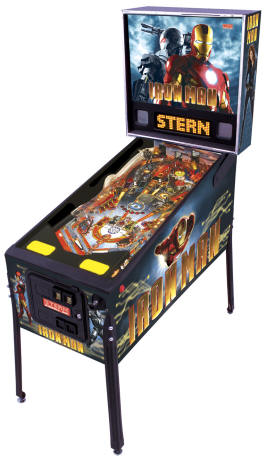
For around a decade, Stern was the only major pinball manufacturer left in the world. They survived by making machines based on bands, films and TV shows; Pirates of the Caribbean, AC/DC, Lord of the Rings, Sopranos, CSI, Terminator 3, Spider-man, Metallica, Avatar, Tron Legacy, The Simpsons, Batman, Indiana Jones and Iron Man all got a pinball machine, thanks to Stern.

The power of nostalgia

Thankfully, a deep-rooted love for pinball means there are plenty of people who will fight tooth and nail to see the industry commemorated and survive. As well as countless websites celebrating pinball, in 2009 the Las Vegas Pinball Collectors Club got together and opened the Pinball Hall of Fame. You can even do a Google Street View tour of the inside of the museum here. It is, quite frankly, incredible.

Inside the Pinball Hall of Fame, Las Vegas

Video pinball and emulation

For generations of pinball fans, they've only been able to enjoy the hobby because of a combination of original video pinball games and pinball emulators. Unlike arcade ROMs, which just need be ripped from the chips and emulated on MAME, Kayaks or whatever, digitising a pinball table accurately is an expensive and painstaking process. There is a community of people out there trying to do just that, with emulators such as PinMAME, Visual Pinball and Future Pinball, but like all emulation it is illegal - the scarcity of actual pinball machines does not get you out of that.


Thank God then for the mayor of Big Bear Lake, Jay Obernolte, whose video game company Farsight Studios, has been creating digital versions of classic tables from Gottlieb, Williams, Bally and Stern for the past decade. Initially they launched manufacturer-specific games with a dozen or so tables in them, but in 2012 they launched The Pinball Arcade. This all-encompassing, ever expanding pinball emulator features almost 50 classic tables and is available on pretty much every platform going.

Following in Farsight's footsteps, there is also Zaccaria Pinball by ASK Homework, which, as the name suggests, emulates Zaccaria tables (around two dozen of them). Unlike The Pinball Arcade, Zaccaria Pinball is only available on iOS and by all accounts it's a little buggy in comparison). But Zaccaria's machines are even harder to find in the real world than those from Bally, Williams, Gottlieb, Data East or any of the other big manufacturers, so let's hope it improves and becomes available on other platforms.

If you're willing to look outside of the classic tables, there is also Pinball FX 2 (known as Zen Pinball on some platforms), by Zen Studios. Also available on every platform going, Zen started out making original tables, such as Nightmare Mansion, Secrets of the Deep and Tesla. For the past couple of years they have gone the way of Stern and started making licenced tables, based on Marvel comics, Star Wars, the FIFA football association and other video games (the Plants Vs Zombies table is a riot).


One of many Star Wars-themed tables in Pinball FX 2/Zen Pinball

Sony also got in on the video pinball scene, with not one, but two games, both featuring licenced tables. For the original PSP there was Pinball Heroes. Released in 2010, it featured tables based on PlayStation 3 games such as Uncharted, Fat Princess, Pain and Everybody's Golf. More recently they released Pinball Rocks for iOS and Android. This rock and metal themed game features tables based bands such as AC/DC, Slayer, Alice in Chains and Bullet for my Valentine. Even movie studio MGM have produced a video pinball game - War Pinball, which features tables from based on movies such as Navy Seals, Missing in Action and (somewhat bizarrely) Platoon.

Pinball purists tend to scoff at video pinball, emulated or otherwise, criticising their physics and unrealistic features. Zen's games in particular include features that could not be done mechanically, such as figures that jump into the playfield to strike the ball and space ships flying around the table. While this annoys me a little, Zen's tables are still fun and challenging. More importantly, for the past decade these video pinball games are all most of us have had to slake our thirst for the silver ball.

The future of pin games

Despite the grim state of the industry a few years ago, things are starting to look up. In 2010, New Jersey-born business man Jack Guarnieri started up a new pinball manufacturer called Jersey Jack. Their début table is based on the MGM classic Wizard of Oz from 1939 and set pinball forums alight when they first announced the game. As this video shows, Jersey Jack have put their heart and soul into this table. It takes classic pinball elements and combines it with modern technology, like a 3D LCD back glass.


Then, in 2012, Andrew Heighway started up the UK's first major pinball manufacturer, Heighway Pinball. Seemingly coming out of nowhere, Heighway has some major industry names on-board, including artist Doug Watson (Attack from Mars, The Getaway: High Speed II, Terminator 2, Black Knight and Black Knight 2000) and designer Dennis Nordman (Elvira and the Party Monsters, Scared Stiff, Dr Dude, White Water (a person favourite). In an interview with the BBC, Andrew Heighway said, "There's been a huge boom in pinball smartphone and console games over the last few years. ...thanks to these video games, there are plenty of kids that have been primed for the real thing."  That is a very interesting quote indeed.

Full Throttle's playfield with an LCD display in the middle

Jersey Jack and Heighway Pinball may have grabbed the headlines in recent years, but they aren't the only ones making new machines. Nordman (again) teamed up with pinball artist Greg Freres (Monster Bash, Strange Science, Star Trek: The Next Generation, Revenge from Mars and Medieval Madness) to create WhizBang Pinball. Together they made a limited number of bespoke pinball machines from other donor machines.

Nordman also teamed up with a new company called Multimorphic to help them create Lexy Lightspeed - Galaxy Girl, a brand new machine built on Multimorphic's P3 platform and due for release at the end of the year. Here's Lexy in action:


The beauty of the P3 system is that its designed to play more than one game on a single table, thanks to its large LCD play field. So as well as Lexy Lightspeed, the table will also play Cosmic Cart Racing when it's finished. I like the idea, but I can't help feeling it falls between two stools, being neither a fully mechanical pinball table, nor a "skies the limit" video pinball, like the sort of thing Zen Studios have been delivering. Rather than being the best of both worlds, it seems like a dilution of both technologies - but hey, at least they're trying.

I'm particularly excited to see what comes out of Heighway, not least because they are the UK's first major pinball manufacturer, but also because more than any other company out there, Heighway are trying to push the industry forward and take advantage of new technology, without compromising the spirit of traditional pinball. Not only that, but they are trying to build pinball machines smarter, replacing unreliable mechanical parts with sensors and other, most robust devices. They are also offering modular tables, making it easier for operators to swap and change faulty parts. The video below shows an early prototype for Heighway's upcoming Circe's Animal House. On the right you can see a blank "white board" version of the table playing, but on the left, you can see what at first appears to be graphics projected on to the surface of another blank table, but which is in fact a transparent LCD display. This allows Heighway to display effects, scores, characters, anything they like, whilst maintaining an entirely traditional playfield.


So with Stern providing the backbone of the industry, The Pinball Arcade reminding a new generation what's so great about pinball, and Jersey Jack and Heighway leading the charge for new developments, it appears pinball is in a better state now than it was 15 years ago. All we need now is for pubs, bowling alleys, seaside arcades and restaurants to start stocking these new machines and we're in business.

MTW

Sources:

BBC New - Flipping heck
BMI Gaming - The History of Pinball Machines and Pintables
Fun with Bonus - Circe's Animal House Preview
Gawker - Pinball Machines: Film's Omnipresent Villain
Gizmodo - How One Perfect Shot Saved Pinball From Being Illegal
Home Leisure Direct - Pinball buying advice
IMDB - The Accused
Pinball Fun - History of Pinball
Pinball Life
Pinball News - FULL THROTTLE: New team members, artwork and interview
Pinside
Slate - Can this man save pinball?
The Internet Pinball Database
The Ultimate History of Video Games [book]
Wikipedia - Pinball

Saturday, 4 May 2013

A brief history of Star Wars arcade games


Today is Star Wars day! Hurray!

Let's be honest though, most people fell out of love with George Lucas's meandering sci-fi epic when he started to ret con the originals to fit the contrived story of the lacklustre prequels. However, with Disney recently buying the rights to all things Lucas and getting JJ "Lost" Abrhams on-board to make Episode VII over the next couple of years, Star Wars isn't going to go away any time soon and may even get good again.

Why do I mention this? Well, not only is today today Star Wars day, but this year is the 30th anniversary of Star Wars arcade video games, so I thought I would do a brief history of Star Wars arcade games, starting with one of the most iconic arcade games of all time.

Star Wars

Manufacturer:Atari
Developer:Atari
Genre:Rail shooter
Year:1983

What better sequence from the original Star Wars film to use for the basis of an arcade game than the seminal Death Star attack run? And that is precisely what Atari did with this magnificent vector graphics rail shooter. The multi-coloured vector graphics may have been incongruous with the film, but they still managed to be incredibly evocative. The game appeared around the same time as another first person vector graphics space game, Elite, for the BBC Micro B. Just like Elite, the way Star Wars looked and moved was closer to "real" space flight than anything else out there. Add in the beautiful cockpit cabinet with the flight stick controls and the digitised voice of Alec Guinness telling you, "The Force will be with you ... always" and Star Wars everyone were in sci-fi heaven.


Star Wars: Return of the Jedi

Manufacturer:Atari
Developer:Atari
Genre:Shoot 'em up
Year:1984

A year after the first Star Wars game and the last Star Wars movie in the trilogy, Atari switched from vector graphics to sprites and an fixed isometric view for Return of the Jedi. Like latter half of the film, the game switched between the battle on Endor and the battle in space to take down the half-built Death Star (2). The Endor levels consisted of racing through the forest on speeders and blasting up rolling logs and eventually the shield generator in an AT-ST. The space levels put you in control of the Millenium Falcon during the attack run on the Death Star, then the escape. The final level has you swapping between both scenes every few seconds, which is simultaneously exciting and disorientating. Like their first game, Atari filled RotJ with digitised voices and also added a few pixellated cut scenes for good measure.

The video below shows a complete play through, although watching the game from beginning to end will give you a frequent sense of deja vu.


Star Wars: The Empire Strikes Back

Manufacturer:Atari
Developer:Atari
Genre:Rail shooter
Year:1985

No, I'm not losing it, the game of Empire Strikes Back may have looked like the original Star Wars game, but wasn't released until a year after Return of the Jedi. The game also used the same vector graphics and cabinet as the original game. The reason for this was simple, Empire was not a full game, but a conversion kit for the original, which included a new daughter board, a new marquee and a decal for the yoke. In terms of game play, it is very similar to the first game, as you might expect. Instead of doing the attack run on the Death Star in an X-Wing, you alternate between flying a T-47 airspeeder (my favourite Star Wars fighter) in the battle to defend Hoth, then escaping the Empire through an asteroid belt in the Millenium Falcon.

The video below is from John's Arcade, who has a brilliant little arcade in his basement. I'm really very, very jealous.


Star Wars Arcade

Manufacturer:Sega
Developer:AM5
Genre:Rail shooter
Year:1993

Here's where an appreciation of proper nouns is important, because Sega's Star Wars Arcade game is should not to be confused with Atari's Star Wars arcade game. See the difference? Anyway, this game does actually play a lot like the original, but with it being released in 1993 and made by Sega, it benefited from being polygonal, not sprites or vectors. Polygonal graphics were exploding in the early 90s and Sega with their Model-1 board were one of the pioneers of the new tech. It wasn't always done well (looking back at Virtua Fighter 1 now is quite hard), but simple textured polys work great for space ships.


Star Wars Trilogy Arcade

Manufacturer:Sega
Developer:AM5
Genre:Rail shooter/Weapon combat
Year:1998

By 1998 it was common knowledge that a new Star Wars film was on its way, which would explain Anakin Skywalker's origins, from his rise in the Jedi order to his eventual fall to the dark side. Despite the ham-fisted way Lucas handled the reissue of the original trilogy, Star Wars fans all over the world were still excited about the prospect of a new film. We all know how that turned out. Anyway, I digress. As the name suggests, Star Wars Trilogy featured scenes from all three of the original films, specifically the rebel attacks on the Death Stars in the first and third films and the Empire attack on Hoth in the second film. While these all played out in much the same way as both Sega's and Atari's previous games, this game had a trick up its sleeve. The cabinet featured a force feedback joystick that allowed you to take control of a light sabre in two special stages. The first pits you against Boba Fett in the battle over the Sarlak pit; the second has you facing down Vader himself. Exciting stuff and it's one of those games that does not emulate well, because the force feedback joystick really added to the atmosphere.


Star Wars Racer


Manufacturer:Sega
Developer:AM5/LucasArts
Genre:Racing
Year:2000

Would it shock any of you if I said I didn't like Phantom Menace? No, I didn't think so. However, the pod racers were a cool (if utterly ridiculous) idea and one that lent itself well to a hectic arcade racing game - which is precisely what Sega AM5 and LucasArts did when they made Star Wars Racer in 2000.
Despite the cabinet looking like Anakin Skywalker's pod racer, the game did give the player a choice of Episode 1 pod racers to play as. While that is a nice idea, I doubt most people could name any of the other racers, with the exception of the villainous Sebulba.
There were many pod racing games on home computers and consoles and to be honest, none of them, not even this arcade version, were as good as WipeOut series on the PlayStation or Nintendo's F-Zero series, both of which did futuristic racing better.


Star Wars Starfighter


Manufacturer:Tsunami Visual Technologies, Inc.
Developer:Tsunami Visual Technologies, Inc.
Genre:Rail shooter
Year:2003

By 2003 the second Star Wars prequel had come and gone, and Star Wars fans were no happier about the direction these new movies were going in. While Attack of the Clones was marginally better than Phantom Menace it was still a terrible, lumbering, incoherent wreck. Anakin Skywalker was now being played by Hayden Christiansen, whose wooden acting earned him the nickname Manikin Skywalker. Even the presence of the world's most potent actor, Christopher Lee, or the appearance of Boba Fett's dad, Jango, could do nothing to save the film. Also by 2003, the arcade scene was all but dead, with modern consoles like the Sony PlayStation 2, Nintendo GameCube and Microsoft Xbox offering experiences that could match or sometimes even better a typical arcade machine. So it seems hardly surprising that Sega did not do another arcade game. Instead, for the last ever Star Wars arcade game, Tsunami Visual Technologies took us back to Episode I. This time the player got to pilot a Naboo StarFighter in a series of aerial challenges followed by an assault on the Trade Federation Droid Control ships around the planet, in much the same way as many previous Star Wars star fighter games. Actually finding footage of this unexceptional game is tough, especially as there was the similarly named Jedi Star Fighter available on many home platforms. It's not a big loss and to be honest, you'll have more fun playing the 30 year-old Atari game instead.

And so it seems whether it's Star Wars movies or Star Wars arcade games, the quality can go up as well as down, but one thing you can say in favour the classic Star Wars arcade games is that George Lucas has never gone back and ret conned them.nj

But wait, that's not all...

Anyone who's been following Arcade Throwback for a good while will know I love pinball machines almost as much as video games, and there have been a fair few Star Wars pinball tables over the years. In fact, they pre-date video arcade games by 3 years. So as an appendix to the brief history of Star Wars arcade games is the even more brief history of Star Wars pin games. 

Empire Strikes Back

Manufacturer:A. Hankin & Company
Developer:A. Hankin & Company
Year:1980


Star Wars 

Manufacturer:Data East
Developer:Data East
Year:1992


Star Wars Trilogy Trilogy 

Manufacturer:Sega Pinball
Developer:Sega Pinball
Year:1997

Star Wars Episode 1 

Manufacturer:Williams
Developer:Williams
Year:2000


Sadly, not only is Episode 1 pinball the only Star Wars pinball table I've played, it was also the last real pinball table I ever played. I found it in an seafront arcade in Blackpool, back in 2002. Based on William's Pinball 2000 platform, the game included a holographic display, which you could interact with by firing the ball at targets on display. It also had a light sabre toy inside the table, which lit up at various points during play. This was before those more authentic light sabre replicas were on the market, so it seemed more special at the time. General consensus is that, like William's only other Pinball 2000 machine, Revenge from Mars, this Star Wars table was not great. Still, I wouldn't mind seeing it in Far Sight's Pinball Arcade.

So there we have it, all of the official Star Wars video games and pinball tables to have appeared in the arcades over the decades. And as rich as this history is, it's nothing compared to history of Star Wars games for home computers and consoles, but I'll leave that to another blog. In the mean time, May the forth be with you - until midnight, then it'll be May the fifth.

MTW

Saturday, 23 June 2012

A brief history of World War II shoot 'em ups

Between modern marketing and the Internet, these days it's relatively easy to keep track of all the sequels, prequels and spin-offs that come out for a video game. Back in the days of the arcade, unless a video game magazine or a friend told you about a new machine, you were stuck with what was in the arcades you visited. And while the histories of certain games, like Street Fighter (which I covered last year) and Tekken, are pretty well known, there are plenty of sequels to classic arcade games which went almost unnoticed. One such example for me is Capcom's classic 1942. I played the original game in the arcade loads and I played 1943 a couple of times, but I had no idea how many versions there were until I started dabbling with MAME in the late 90s.

So here, 60 years after 1942 (if you see what I mean), is my brief history of World War II-themed shoot 'em ups.

1942 (1984)

The formula for 1942 was simple. It was a vertically scrolling shoot 'em up, set during World War II, rather than space, like so many others from that era. You pilot the Super Ace, which looked exactly like a World War II Lockheed P-38 Lightning. Your mission was to blast through waves of Japanese fighter planes on your way to Tokyo to destroy an air base. Shooting down a sequence of red aircraft would deposit a power-up, which could be double fire-power, wide shot or two small escort planes. You could also perform a loop-de-loop to avoid enemy flak, although I never found it be particularly useful.

Despite its sober setting and authentic looking fighter craft, there was something endearing, almost cute, about 1942. Perhaps it was the put-put-chugga-chugga-peep-peep music, which sounds like your Super Ace is struggling against gravity, let alone the Japanese air force. 


Its popularity catapulted Capcom into the big league and it would become their first game to spawn a sequel.

1943: The Battle of Midway (1987)

The first sequel arrived three years later. The basic gameplay did not really change, you still had to battle the Japanese air force over the Midway Atoll, you still got power ups from blasting waves of red planes and you could still do a loop-de-loop, if the desire takes you. However, everything was sort of beefed up. The second button was now a special attack (lighting or a tsunami), but which took part of your life bar (a conceit also seen in Capcom's side-scrolling beat 'em ups, like Final Fight and X-Men. The game also removed the traditional three lives and replaced it with a single life bar, which depleted as you took damage, but could be replenished by collecting POW icons. It also added two player co-op, a feature that would stay with the franchise throughout. The music also changed to something more rousing and military-like.

1943 will added two player co-op, timed power-ups and special attacks.

In Japan only, Capcom released an updated version of the game called 1943 Kai, which featured reworked graphics and sound, replaced the P-38 with a Boeing Model 75 biplane and added insane power-ups, like laser guns, which were totally incongruous with the game's WWII theme.

1941: Counter Attack (1990)

The next game in the series came out another three years later, but was set two years earlier. The conflict shifted from the Pacific to the Atlantic. Player 2 now flew what looked like a British-made Mosquito Mk IV fighter and instead of the bomb and loop being separate attacks, they were now a single action, so you avoided flak and wiped the screen of enemies in one action. The game also introduce a powerful homing attack, which had to be charged by holding down the power button  — R-Type style.

1941 gave player 2 a Mosquito Mk IV and added narrow canyons to navigate

19XX: War Against Destiny (1996)

A number of things changed with the third sequel, 19XX. For a start, the player was given a choice of three fighter planes; the Super Ace was now identified as a (P-38) Lighting, the Mosquito was more powerful and the new plane, the (Japanese-made Kyushu J7W Shinden prototype) was fast and nimble. Each ship got a unique weapon too. The game also introduced mission briefing before each level, where you got a summary of the boss you'd be facing at the end. Capcom also lifted the medal system from the Raiden series. Tactically, the most interesting change was to the charge weapon. Now, if your charge shot landed you got several seconds of homing attacks on top of your normal primary weapon. When it came to taking down bosses you had to decide whether you chipped away with the main weapon or charged up in the hope it lands and you can then hit it with homing attacks.

A choice of planes and mission briefings were just some of the changes in 19xx.

Between the mission briefings and the post boss cinematics, 19XX really feels like a modern arcade game and it's one of the best in the series.

1944: Loop Master (2000)

Developed by Raizing/8ing (the guys behind Battle Garegga), 1944 is a different game again to its predecessors. The Shinden and Mosquito were dropped and instead the plaayer 1 was given the Lighning and player 2 was given a Mitsubishi Zero. The charge attack no longer had a follow up homing attack, instead you got an aerial assault, which (like the loop) kept the player out of harms way for a brief time. The wingman also played a bigger part, with the power-ups floating down to the bottom corner of the screen to be picked up at the player's discretion. The medals were also replaced with gems.

This was also the first game in the series with continues. When you're plane explodes your pilot jumps out and floats around with his parachute. When you continue, rescuing the pilot rewards you with a selection of the power-ups you had before you died.

The game ran on Capcom CPS2 hardware and it is a great looking game with a widescreen aspect ratio and lots of little details.


The Legacy

So that's my brief history of Capcom's 1940s shmups, but they weren't the only ones at it. Plagiarism in the games industry is pretty rife, you only have to look at how many Pong clones were made during the '70s, so it's not surprising 1942's popularity lead to a few copy cats, some of which were based on World War I and many of which really stretched the authenticity of their setting.

Flying Shark and Fire Shark (1987 & 1989)

Toaplan made a lot of great vertically scrolling shooters (Raiden, Truxton and Batsugun to name just a few), so it's hardly surprising they got into the World War-themed shmup scene. Between 1987 and 1989 they developed two such games, both with World War I themes and featuring bi-planes, Zeppelins, tanks and lasers! Yeah well, the less said about that the better. The games follow almost exactly the same template as other Toaplan shmups, yet somehow were never as thrilling as either Capcom's classic series or their own siblings, including this next game....

Twin Hawk (1989)

Also by Toaplan, Twin Hawk appears to be set in the second World War, just like Capcom's games. On the whole, Twin Hawk plays the same as the Shark games, as well as the aforementioned Raiden series. One novel feature was the ability to call forth a whole squadron of helper planes for a few seconds, after which they systematically dive bomb your enemies -- which seems a little extreme, but there you go. Given a choice of which of Toaplan's World War shmups to play, I'd probably go with the Hawk over the Shark.


This is going piste a bit, but Hardcore Gaming 101 did a great piece on Toaplan's shmups earlier this year, which you can check out here.

Strikers 1945 series (1995 - 1999)

When I first saw Psikyo's Strikers 1945 I assumed it was a follow up to the firs three 194x games, but it's actually a totally different vertically scrolling shmup with WWII fighter planes. While it would be easy to dismiss it as a blatant rip off, the Strikers games do have a few merits of their own, not least the choice of planes available to the player. The first game had the P-38 Lighting (same as 1942), the P-51 Mustang, the Shinden, the Messerschmitt BF-109, the Mitsubishi Zero and every Brits favourite piece of World War II hardware, the Spitfire. For the second game (Strikers 1945 II, also known as Strikers 1945 Plus) Psikyo added the Vought V-173 "Flying Pancake", but by the third game (Strikers 1945 III, also known as Strikers 1999) Psikyo brought the roster up to date, with the F-22 Raptor, F-117 Nighthawk and the AV-8 Harrier jump jet.

I like the Strikers games, but they are totally over-the-top, even more so than Capcom's later 1940s games. Transforming fighter planes anyone?


1942: Joint Strike (2008)

As well as porting the arcade games to home consoles in several Capcom collections, in 2008 Capcom and developers Backbone Entertainment released 1942: Joint Strike for home consoles. The game features gorgeous high definition polygon graphics and like 1944 it plays in a widescreen aspect ratio. Don't let the name fool you though, it plays more like the later games than the original. I assume this because of the combination of the bankability of 1942 as a name and Psikyo's similarly-named series.

1942: Joint Strike is a bit like a super model: great to look at, but not much going on underneath.

Due to the popularity of online gaming these days, Joint Strike had an emphasis on multiplayer co-op, even adding special collaborative attacks that are only available in two player mode. However, the game was underwhelming. It's difficult to say what it is, because they have all the ingrediants, they've just not cooked it for long enough. However, die hard fans of the series may still enjoy it, especially in co-op mode.

Horizontally scrolling WWII games

While it would be a bit of an assumption to say 1942 inspired the following games, they are nonetheless noteworthy as other World War II-themed shmups:

P-47: The Phantom Fighter  (Jaleco, 1988)

US AAF Mustang (UPL, 1990)
P-47: Aces (Jaleco, 1995)

Progear (Cave, 2001)

Akai Katana Shin (Cave, 2010)

What I think is most suprising of all is how few World War I or II themed shoot 'em ups there have been full stop and the ones that do exist have been made by the same few developers. There may be a few others I've missed (I suppose I could have included Atari's first person vector rail shooter Red Baron), but this is pretty much all there is. Had I been trying to compile a list of space-themed shmups, I doubt I could have even got half way.


MTW

Sunday, 19 June 2011

Brief History of Street Fighter games

20 years ago this month, I met the love of my life. No, I'm not talking about the missus, I'm talking about my one great gaming love, my digital mistress since I was a spotty teen, the Street Fighter series. Despite the years I'm as far down the rabbit hole as I've ever been and I'm not the only one who feels like that. Destructoid recently ran an article called Happy 20th Birthday to Street Fighter II: World Warrior. So to show my love and admiration of all things Street Fighter, here is Arcade Throwback's brief history of the legendary franchise.

Street Fighter (1987)

Let's be honest, the first Street Fighter was a poor game (CVG gave it 2/10 when they reviewed it 1987). That said, many of the basic themes and mechanics that made the other games so popular were in place right from the beginning. The player took control of young Japanese fighter, Ryu, as he fought his way around the globe, taking on such characters as Birdie the British punk, Gen, an elderly assassin, Adon, a Muay Thai kick boxer and finally Sagat, a myopic 7' tall Muay Thai master. Capcom did attempt a novel idea in the top tier version of the arcade cabinet. Instead of normal micro-switch buttons for kick and punch, it featured two giant, pressure sensitive buttons. The idea being the harder you thumped the buttons, the harder Ryu (or some blond American called Ken if you were player 2) kicked and punched his opponents. It was a great idea in principle, but we are taking about a machine that was in accessible to all manner of show offs, drunks and all other types of pillock, so invariably the buttons were broken. Not that was Street Fighter 1's only problem. The timings for the animations were a bit off, so you never quite felt like you were in control. The game even featured Ryu's legendary Hadouken fire ball attack, but even the best players struggled to pull it off consistently. It's a shame, because as you can see from the image above-right, it was a great looking machine, with a big, arching spine and semi-circular control platform.

Lee putting the smack down on a young, inexperienced Ryu.
I first played Commodore C64 version of Street Fighter, which was as bad as any coin-op conversion in those days and between that and the lacklustre arcade version, I could easily have forgotten about the series, but like most Street Fighter fans, it was the sequel that seduced me.

Street Fighter II series (1991 - 1994)

I remember reading a review of Street Fighter II: The World Warriors in CVG in the Spring of 91. The reviewer (which I believe was none other than Julian "Jaz" Rignall) raved about it and I thought it looked brilliant.  I first played it in a Great Yarmouth seafront arcade a few months later and I've been hooked ever since.

Scrappin' on the dock of the bay

That first taste of the game was short and sweet, as it was just a two week holiday affair. I didn't get to play it very much and did not find out about the game's trademark special moves (having never discovered them in the handful of times I played the original either). Thankfully, I was 16 by now and after the summer holiday's I was in the 6th form, wearing skinny jeans and Motley Crue T-shirts and generally feeling like quite the grown up. For the first time in my life I was making the five mile journey into town on my own to play the game in the local arcades and got to know other  local players. Together we discussed tactics and secrets and soon mastering the Ryu and Ken's dragon punch and the Hadouken or most challenging of all, Zangief's spinning pile driver, became an obsession.

From sequels to updates

Over the course of the next 18 months or so, as players got more and more skilled, the game changed a number of times. In 1992 Capcom released an official update, called Street Fighter II': Champion Edition (the apostrophe apparently means 'upper' in Japan) or Street Fighter '92 as my friends and I called it. As well as a few updated portraits, Champion Edition made Balrog, Vega, Sagat and M. Bison playable characters for the first time, opening up a greater variety of gameplay and tactics than ever before.

Sagat and M. Bison, perhaps the two most popular additions in Champion Edition.
But Champion Edition wasn't the only update and while Capcom developed a reputation for constantly updating their games, they also weren't the only ones doing it. In 1993 a few hacked versions of Champion Edition started to appear in the arcades, which bent the rules of the game dramatically. Perhaps the most famous of these bootleg versions was Rainbow Edition, which had such changes as adding the ability to perform special moves in mid-air, long and wide dragon punches for Ryu and Ken, super slow fireballs, fireballs for E. Honda and most bizarre of all, being able to change character mid-match, by pressing the start buttons. It was fun for a while, but it totally broke the game's already questionable balance. Check out the video below to see some of the craziness in action.


Rather than start issuing litigations, Capcom responded with their own tweaked version: Street Fighter II: Hyper Fighting. Based on Champion Edition, Hyper Fighting added faster gameplay, multiple character colours and new move sets. Unlike the bootleg versions, Hyper Fighting did not totally break the game's balance and serious Street Fighter players soon adopted Capcom's official update. It was with Hyper Fighting that I switched from being a Ryu player to being a Blanka player, as he was one of the characters to get a few new moves, most notably a vertical cannonball attack.

The Super Street Fighters

Shortly after Hyper Fighting, Capcom released Super Street Fighter II: The New Challengers. As the subtitle suggests, this update added new characters to the roster. Fei Long was a blatant Bruce Lee clone; DeeJay was yet another kick boxer, this time from Jamaica; despite sharing his name with John Travolta's gang in Grease, T. Hawk was actually a giant native American grappler and finally there was the bare-butt cheeked British agent, Cammy. But SSFII didn't just introduce new characters. Most of the artwork was updated, so the whole game looked more vibrant, plus the announcer's voice was changed. Perhaps most interesting of all for serious players, the game now tracked combos, and displayed the hit count and points accordingly.

Super Street Fighter II was much more than just a roster update

In 1994, Capcom released the final Street Fighter II update, Super Street Fighter II Turbo, which gave The New Challengers a taste of Hyper Fighting speed (selectable by the player at the start of the game), as well as a bit of rebalancing. Perhaps most importantly of all, SSFIIT added air combos and Super meters, which when filled, allowed the play to off enhanced special moves called Super Combos, which were more dazzling and also more devastating than the standard special moves. It was a mechanic that would go on to form the backbone of the Street Fighter franchise going forward.

And so, after five updates in two years, everyone was expecting a sequel. Nobody expected what Capcom actually did.

Street Fighter Alpha series (1995 - 1998)

Street Fighter Alpha: Warrior's Dream (or Street Fighter Zero as it was known in Japan) was a prequel, set between the first Street Fighter and Street Fighter II. This gave Capcom licence to play around with the roster. Only a handful of characters from the Street Fighter II series reappeared, although several characters from the original made an appearance, as well as a couple of new characters also also, much to the delight of Capcom fans in general, Cody, Guy and Sodom from Final Fight. What was also notable was the change in art style, which switched to a more anime look. The game also saw the expensive of the Super metre, so that players could chose been a three tier metre that could be triggered at each tier for vary degrees of damage, a a single bar to deal massive damage in a single Super Combo, or a timed period of increased damage in lieu of an actual Super Combo.

Cody laying the boot into new girl Karin with a Super Combo
Capcom released two sequels between 1996 and 1998, with largely unchanged mechanics, but bigger and bigger rosters. During this time the Street Fighter franchise itself got a whole lot bigger, but not necessarily a whole lot better.


Street Fighter EX series (1996 - 1999)

Sega's Virtua Fighter was the first of many 3D polygonal beat 'em ups to emerge in the mid-90s and everyone wanted a piece of the action. Namco fired back with Tekken and Soul Edge, Tecmo released Dead or Alive, Midway took Mortal Kombat into the third dimension with the woeful Mortal Komat 4 and in 1996 Capcom handed the Street Fighter franchise over to Arika to develop a 3D spin-off. The result was Street Fighter EX and while not as terrible as  Mortal Kombat 4, it was not a great game.

Ugly, blocky and slow, but SFEX did have a few good ideas and characters in it, such as Skullomania.

In true Street Fighter style, Capcom kept updating it, with EX Plus hitting arcades in 1997, EX 2 in 1998 and finally EX 2 Plus in 1999. Despite the iterations most of the problems that plagued the first EX persisted throughout the series. Which is a shame, because the new characters were, on the whole, pretty good — which is more than can be said for the next big Street Fighter instalment.

Street Fighter III series (1997 - 1999)

The official sequel to the biggest arcade game of all time was a little lost in the crowd of spin offs, prequels and versus games that Capcom were putting out. Indeed, when it first came out most fans were a little disappointed, especially in light of how good the Alpha series was. SFIII ditched all but Ryu and Ken from the roster, added a bunch of new characters, most of whom were a lacklustre compared to other introductions over the years. Grappler, Alex, took the lead as the game's main character, but unlike Ryu and Ken, he was generally not popular with gamers. As this was a sequel, the final boss was new too, so uninspiring that a decade one from when I last played Street Fighter III all I can remember is that his name of Gill. He was certainly no M. Bison.

They also added a bunch of new technical features that many fans were not ready for. Most notable of these changes was the parry. Tap the joystick forwards at the critical moment and it was possible to deflect an attack, rather than just block it, given skilled players a brief window to launch a punishing counter attack. Just go on YouTube and look up "The Beast Unleashed" for a crowning example of this. Visually the game was gorgeous, with a stunning numbers of frames of animation for each character; clothes billowed, tassels flapped and the moves flowed with unrivalled fluidity.

Initially, Alex was the poster boy for Street Fighter III, but that soon changed.
Thankfully, Capcom could see things needed improving. Over the next 18 months they released two updates, 2nd Impact: Giant Attack added more new characters, including a very familiar looking wrestler with sunken eyes and floppy hair. From a gameplay perspective 2nd Impact added EX Specials, which were more powerful special moves that used part of the Super Arts meter, throw and grapple escapes, and character specific taunts.

But it was 3rd Strike: Fight for the Future that really won people over again. Among the editions were fan favourite Chun-Li and the brilliant Makoto, plus a load more new gameplay features, including air parries, parries during guard stuns, plus a post fight grading. SFIII was now a legitimately great game and now that players had had time to get used to new, more technical gameplay, it was as popular as ever on the tournament scene. Which is a good thing, because Street Fighter fans had to make do with it for almost a decade, before they got a new instalment.

Street Fighter IV series (2008 - 2010)

A lot can happen in 10 years. For the Street Fighter franchise, it survived the death of the arcade through numerous spin-offs and anniversary collections, but they were for a niche audience. Fighting games were no longer mainstream, first person shooters had taken over. And so when Street Fighter IV was first released in 2008 it was amazing Capcom had bothered to resurrect the franchise at all, but in doing they also resurrected fighting games as a whole.

SFIV got almost everything right from the beginning. The new art style was striking, compelling and made smart use of 3D. And roster was pretty good, right off the bat, with most of the new characters fitting right in. The game also ditched the parry system in favour of a simpler, but more versatile Focus Attack, a powerful, universal guard breaking attack, which can be used to cancel specials, but which can be cancelled itself to create a double feint. Forget rush downs and combos, with SFIV you have to be defensive. Jumping at your enemy or constantly fireballing will get you no where against a skilled opponent in SFIV — you have to master the Focus Attack.

If you thought the Alpha series being set between Street Fighter and Street Fighter II was confusing, SFIV was set between II and III. What that meant was that Capcom and developers Dimps had licence to include all twelve members of the original cast. The game also introduced a host of great new characters. There was amnesiac French soldier, Abel; luchador El Fuerte; sexy female spy, Crimson Viper; and my favourite of the new guys, the lardy kung-fu fighter, Rufus. New computer controlled characters included Akuma's older brother Gouken and new box, the chromed genetically enhanced head of the SIN organisation, Seth.


Great graphics, great characters and great mechanics, SFIV has it all.
As with its predecessors, SFIV got a an update in the form of Super Street Fighter IV: Arcade Edition, which was released in 2010 and contained more changes to the gameplay, plus a slew of new characters.  Returning characters included Adon from the first game, DeeJay from SSFII, Makoto, Yun, Yang, Ibuki, and Dudley from SFIII and Cody and Guy from Final Fight.

The franchise and the genre had come pretty much full circule, and the fighting scene in general was reinvented.

The spin-offs

As well as the main three Street Fighter series, there have been a number of spin-offs that aren't part of these main branches of the games. Some you will doubtless be familiar with, others... not so much.

The Vs games 

It would be remiss of me not to mention the Street Fighter Vs games. There's been a surprising number of them over the years and on the whole they add a lot more crazy than the regular games. Here's a quick break down of them all:
  • X-Men vs Street Fighter
  • Marvel Super Heroes vs. Street Fighter
  • Marvel vs. Capcom: Clash of Super Heroes
  • Marvel vs. Capcom 2: New Age of Heroes
  • Capcom vs SNK: Millenium Fight 2000
  • Capcom vs SNK 2: Mark of the Millenium 2001
  • SVC Chaos
  • Tatsunko vs Capcom: Ultimate All Stars
And they are just the ones that appeared in the arcade. There were a whole bunch more on home consoles. As the titles suggest, these games pitch Capcom and Street Fighter characters against characters from other  arcade franchises, comic books and anime series. On the whole, the other characters are well designed and implemented, so much so games like Marvel Vs. Capcom 2 have become staples of the fighting game tournament scene. Even for someone like me, who doesn't know a massive amount about comic books, it's great to see Zangief take on The Incredible Hulk or Felicia face down Wolverine.

Familiar faces from Marvel and Capcom come together is this OTT fighter.

Street Fighter: The Movie — the game (1995)

Oh boy, that Jean Claude Van Damme Street Fighter movie was terrible. Really very bad indeed. It was so bad that the Mortal Kombat movie that followed seemed like friggin' Citizen Kane in comparison. Perversely for a movie based on a game in the first place, Capcom put out a game based on the movie. Developed by Incredible Technologies, it used digitised versions of all of the movie's stars, much like Mortal Kombat had done in the original few games.

The game used much of the same mechanics as Alpha game, but added a whole load of new tricks that would carry over into later games, such as the ability to cancel special moves. It also added exclusive special movies to many characters, such as a pig tail whip for Cammy, which never saw the light of day again.

It was better than you might have expected and needs to be mentioned for the lasting contributions it made to the series, but in honesty, I'd had rather played SSFIIT or Alpha at the time.


Super Deformed Fighters

For a while in the 90s video games went crazy for super deformed characters and Capcom were no exception. In 1996 they released Super Puzzle Fighter II Turbo, which, as the name suggests, was a puzzle game involving Street Fighter (and Darkstalkers) characters. Despite what the title also suggests, this wasn't a sequel; the Roman numeral in the name was a parody of previous Street Fighter games — for some reason.

Rather than being a simple cash-in, Puzzle Fighter was a brilliant, competitive puzzle game. The idea was to match gems by colour to make massive gem blocks, then break them with a breaker gems that floated down periodically. When you break a load of gems they get sent to your opponent's play field for them to deal with, only now they have a counter on them before your opponent can break them. Flood your opponent's play field and you win. However, there were lots of tactics to consider. Firstly, each character sends gems in particular patterns, which may include grouping colours together in a way that can spell trouble for you if your opponent can get their counters down to zero and send them back at you. Also, as you get a few seconds warning before blocks are dumped on you, it's possible to mitigate the damage by breaking a load of your existing gem blocks (and sacrificing any big attack you were planning). The game is a real tug of war and victory can be snatched from the jaws of defeat right at the very last second. Despite the cute and colourful graphics, the game play was as vicious as the fighting games.

Ken Masters laughs at school girl Sakura's misery. What a tough guy!
In 1997, Capcom released Super Gem Fighter: Mini Mix featuring the same super deformed characters as Puzzle Fighter. This time it wasn't a puzzle game, but a pared down fighting game that used aspects of the later Street Fighter games, Darkstalkers and, in particular, an oft-forgotten Capcom fighting game called Red Earth. It is elements borrowed from Red Earth that provide the titular gems. As you bash opponents, Puzzle Fighter-like gems fall from them. Collecting these charge up the three gauges, which determine the power of your character's special moves; the more powerful the special move, the more gems your opponent will drop. The game's controls were greatly simplified from any of Capcom's other games, with just one punch button, one kick button, a special button and a taunt button. However, since all of the character's special moves were performed in the same way as in the games they came from, playing Gem Fighter is remarkably familiar. 
Ahh, doesn't Akuma look cute with his big massive head?
Like Puzzle Fighter, Gem Fighter is brimming over with charm. I love how there are other characters in the background doing crazy things (Bison on a sledge, anyone?) and how certain special moves will cause characters to change clothes mid-attack. If, like me, you have young kids who want to play the fighting games daddy (or mummy) plays, Gem Fighter is a great compromise and it's easy for players of all skill levels to have fun with it.

And so...

I know to the casual observer it's just another button mashing beat 'em up, but to the devoted, like myself, the changes Capcom and co have made over the course of the past two decades have been significant. As such I've bought maybe a dozen different versions of the game and enjoyed each one in different ways. World Warriors is the purest version of the game, Alpha 3 was a culmination of everything that made the series great, Street Fighter III had a strange cast, but required more skill that any other 2D beat 'em at the time and Street Fighter IV kick started a fighting game revival. 

MTW